BLOGGER TEMPLATES AND TWITTER BACKGROUNDS

Sunday, April 25, 2010

Acrylic paint


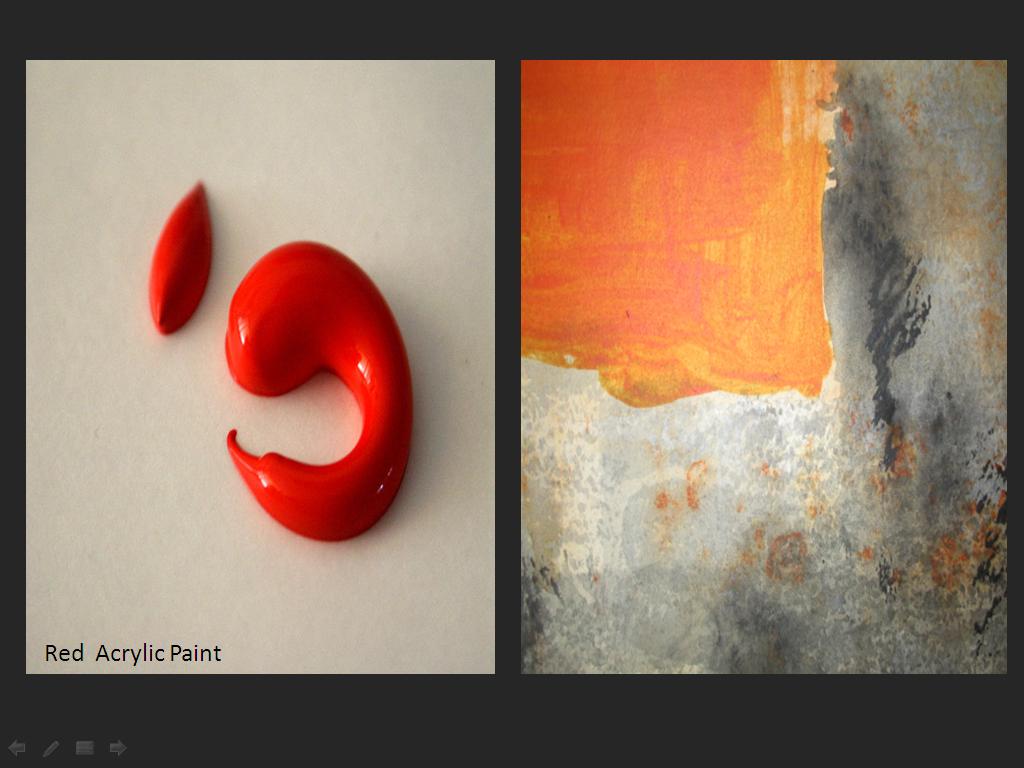
Acrylic paint is fast-drying paint containing pigment suspended in an acrylic polymer emulsion. Acrylic paints can be diluted with water, but become water-resistant when dry. Depending on how much the paint is diluted (with water) or modified with acrylic gels, media, or pastes, the finished acrylic painting can resemble a watercolor or an oil painting, or have its own unique characteristics not attainable with other media.

Aesthetics and theory of painting


Aesthetics is the study of art and beauty; it was an important issue for such 18th and 19th century philosophers as Kant or Hegel. Classical philosophers like Plato and Aristotle also theorized about art and painting in particular; Plato disregarded painters (as well as sculptors) in his philosophical system; he maintained that painting cannot depict the truth—it is a copy of reality (a shadow of the world of ideas) and is nothing but a craft, similar to shoemaking or iron casting. By the time of Leonardo painting had become a closer representation of the truth than painting was in Ancient Greece. Leonardo da Vinci, on the contrary, said that "Pittura est cousa mentale" (painting is a thing of the mind). Kant distinguished between Beauty and the Sublime, in terms that clearly gave priority to the former. Although he did not refer particularly to painting, this concept was taken up by painters such as Turner and Caspar David Friedrich.

Tuesday, April 20, 2010

Wheatfield with Crows


Wheatfield with Crows is a July 1890 painting by Vincent van Gogh. It is commonly but mistakenly believed that this was Van Gogh's last painting, a misunderstanding fed by "seeing the dramatic, cloudy sky filled with crows and the cut-off path as obvious portents of his coming end".

A usual interpretation of this painting is that it shows Van Gogh's troubled state of mind with a dark, forbidding sky, the indecision of three paths going in different directions and the black crow’s overhead being signs of foreboding or even death. The artist wrote that he had made three paintings in Auvers of large fields of wheat under troubled skies.

Tuesday, April 6, 2010

Traditions of 13th century Tuscan painting


The art of the region of Tuscany in the late 13th century was dominated by two masters of the Byzantine style, Cimabue of Florence and Duccio of Siena. Their commissions were mostly religious paintings, several of them being very large altarpieces showing the Madonna and Child. These two painters, with their contemporaries, Guido of Siena, Coppo di Marcovaldo and the mysterious painter upon whose style the school may have originated, the so-called Master of St. Bernardino, all worked in a manner that was highly formalised and dependent upon the ancient tradition of icon painting. In these tempera paintings many of the details were rigidly fixed by the subject matter, the precise position of the hands of the Madonna and Christ Child, for example, being dictated by the nature of the blessing that the painting invoked upon the viewer. The angle of the Virgin's head and shoulders, the folds in her veil, and the lines with which her features were defined had all been repeated in countless such paintings.

The influences upon the Development of the Renaissance


The influences upon the development of Renaissance painting in Italy are those that also affected Philosophy, Literature, Architecture, Theology, Science, Government and other aspects of society. The following list presents a summary, dealt with more fully in the main articles that are cited above.
• Classical texts, lost to European scholars for centuries, became available. These included Philosophy, Poetry, Drama, Science, a thesis on the Arts and Early Christian Theology.
• Simultaneously, Europe gained access to advanced mathematics which had its provenance in the works of Islamic scholars.
• The advent of movable type printing in the 15th century meant that ideas could be disseminated easily, and an increasing number of books were written for a broad public.
• The establishment of the Medici Bank and the subsequent trade it generated brought unprecedented wealth to a single Italian city, Florence.
• Cosimo de' Medici set a new standard for patronage of the arts, not associated with the church or monarchy.
Saturday, April 3, 2010

The influences upon the Renaissance painting


The influences upon the development of Renaissance painting in Italy are those that also affected Philosophy, Literature, Architecture, Theology, Science, Government and other aspects of society. Classical texts, lost to European scholars for centuries, became available. These included Philosophy, Poetry, Drama, Science, a thesis on the Arts and Early Christian Theology


Italian Renaissance painting
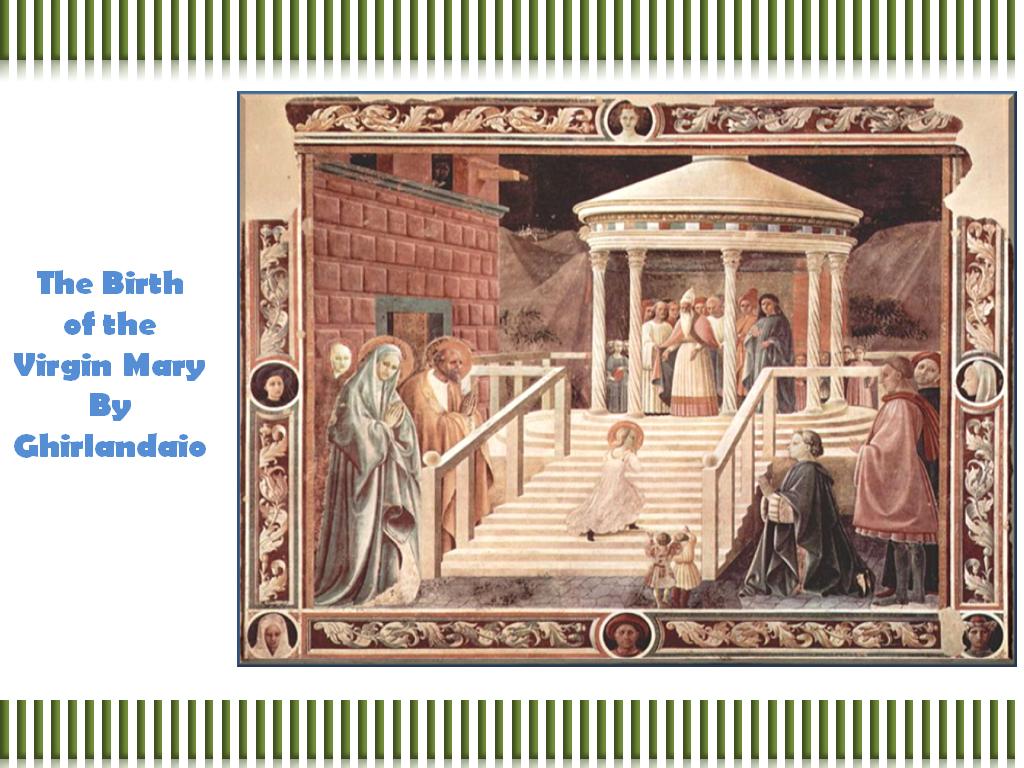
Italian Renaissance painting is the painting of the period from the early 15th to mid 16th centuries occurring within the area of present-day Italy, which was at that time divided into many political areas. The painters of Renaissance Italy, although often attached to particular courts and with loyalties to particular towns, nonetheless wandered the length and breadth of Italy, often occupying a diplomatic status and disseminating both artistic and philosophical ideas.
The city that is renowned as the birthplace of the Renaissance and in particular, Renaissance painting, is Florence. A detail background is given in the companion articles. Italian Renaissance painting can be divided into four periods:

• Proto-Renaissance, 1290–1400.
• Early Renaissance, 1400–1475.
• High Renaissance, 1475–1525.
• Mannerism, 1525–1600.